Background
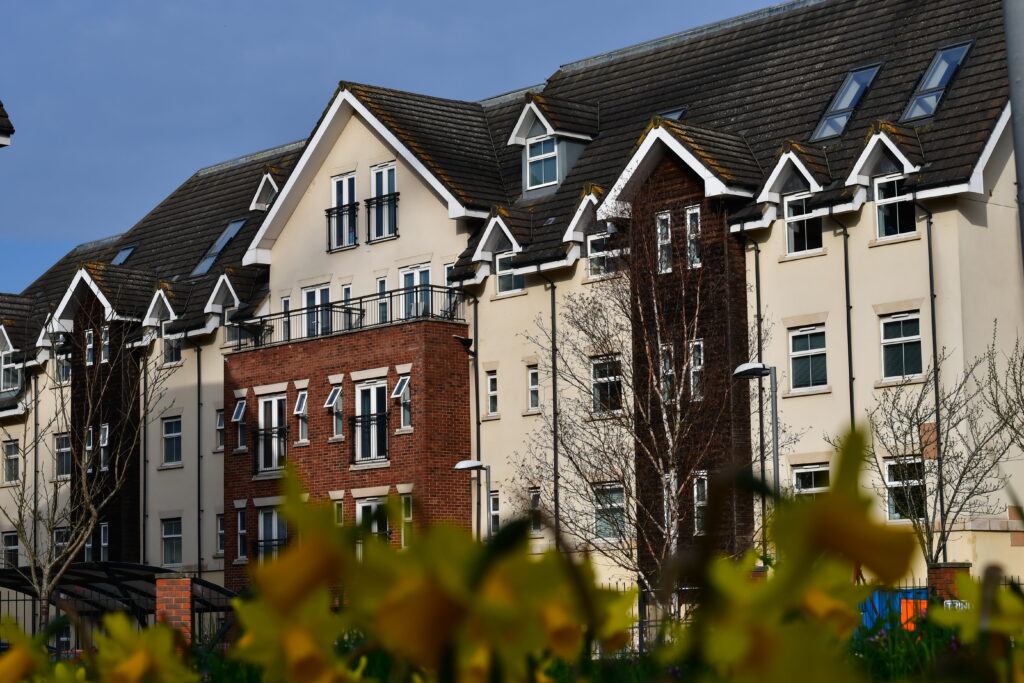
When Red Brick Management Ltd took over responsibility for Townsend Mews, a 155-unit residential development spread across six blocks in Hertfordshire, the situation was immediately challenging.
The service charge account held just £5,000 – an amount that barely covered basic reactive maintenance for a development of this stature, let alone the scale of issues present across the estate. Years of underinvestment had left the development in a visibly deteriorating condition with residents increasingly concerned about both safety and living standards.
A comprehensive inspection quickly revealed the extent of the problems: the building fabric across multiple blocks had begun to fail with leaking flat roofs, deteriorating dormers, and defective VELUX windows allowing persistent water ingress.
At the same time, critical life-safety systems were either non-compliant or in disrepair throughout. Automated Opening Vent (AOV) systems were unreliable, emergency lighting was inadequate, and dry risers required urgent attention. Fire compartmentation had been compromised in several areas, and many fire doors no longer met regulatory standards. These issues presented not just maintenance concerns, but serious health and safety risks.
Beyond the structural and safety challenges, the development’s infrastructure was also struggling as it was around 15 years old. Lifts required servicing and repair, and water tanks and booster pumps were outdated, unreliable and bypassed in some circumstances.
The intercom system no longer met the needs of residents as most had lost or held defective fobs for access which was resulting in frequent damage to doors. Externally, the estate lacked organisation and control as the parking was unmanaged, with faded line markings and no effective system in place to enforce demised parking spaces.
The Solution
Despite being faced with these challenges, we adopted a structured and proactive approach based on levels of priority. This approach required us to implement a robust financial plan that would accommodate the needs and urgent requirements at the development.
Our first priority was to stabilise the development by identifying and addressing the most critical health and safety risks. A phased programme of works was introduced, ensuring that the limited funds held were directed where they would have the greatest impact.
Delivering this programme required careful financial management and strong contractor relationships. Competitive tendering was used to secure the best value for money, whilst works were often strategically grouped together to reduce costs for leaseholders. Payment terms were negotiated and extended to allow projects to proceed despite the limited initial budget and funding held.
Under the circumstances, residents had understandably been anxious about the change of managing agents. However, through clear, honest, and consistent communication—explaining the challenges, outlining the plan, and, most importantly, delivering on promises—we quickly gained their trust as a reputable agent with their best interests in mind.
As the programme progressed, tangible improvements began to take shape. Roofs were repaired in multiple locations, defective dormers refurbished, and leaking VELUX windows sealed, which significantly reduced the water ingress and active leaks present at the time of inception.
Fire safety systems were brought back into compliance, with upgrades to AOVs, emergency lighting, dry risers, and fire doors.
Lifts were repaired across 4 blocks with water systems also brought back into service and all properties had newly programmed fobs provided for access which improved the overall security of the development.
Attention then turned to the external environment as the car park was relined to clearly define demised spaces, and a parking control scheme was introduced to monitor and enforce proper usage.
The Result
These changes, while relatively simple, had a noticeable impact on the day-to-day living experience of residents and the overall presentation and function of the development.
We have seen the development transform and whilst we are not yet finished, we take great pride in works done to date. For Red Brick Management, what began as a severely underfunded and deteriorating site has now become a stable, safe, compliant, and well-managed residential environment.
Residents now benefit from improved safety, a more reliable infrastructure, and a proactive approach to maintaining their homes. This has also allowed for better long-term and financial planning that will in turn improve the development for years to come.
This case study demonstrates how even in the face of extreme financial constraints, Red Brick Management’s disciplined and strategic approach to property management can deliver meaningful and lasting results. By prioritising stability, safety, and long-term financial planning, we ensure property owners benefit from optimised asset value and assured regulatory compliance.